Showing posts with label Packaging Challenges. Show all posts

Tuesday, March 26, 2019

Protecting Shipments with PE Foam

Protect Your Shipments

Some of the nation’s largest transportation companies have recommendations that are tried and true when it comes to surface protection and large bulky shipments. Many products, such as home furnishings, are now made overseas. So, they need to be packaged to withstand ocean transit.  Transportation can have extensive effects on the level of product damage, this includes everything from travel distance to road conditions. Shock and vibration can affect trailers, which combined with rough roads, can magnify the compressive stress on boxes by a factor of ten. Polyethylene (PE) foam can dampen the effects of vibration. This makes it an excellent protective packaging solution for products that may receive indelicate handling or involve long distance transportation.

At least 30% of all products ordered online are returned. Of those, 20% are returned because they were received with damage. TWEET THIS

Polyair Laminated Foam - Lamifoam diagram
Polyair Lamifoam combines the cushioning properties
of foam with a film for greater resistance to punctures

A Fully Customizable Solution

PE foam is used in a variety of industries including the electronics, furniture, cabinetry, appliance, and automotive industries. This is because, like corrugate packaging, foam is easily customizable and non-abrasive. Laminated Foam Solutions come in different film thicknesses, offering customized strength, combined with different foam thicknesses for a fully customizable solution. It is also reusable, which can cut costs for products that are created and assembled in different locations. This makes PE foam an affordable solution for many businesses.

Customer Peace of Mind

Foam is one of the best ways to secure products for shipping, but it’s not all about protection. It adds a professional aspect to the packaging that can create a positive, trusting image in the consumers’ minds. Consumers will have future peace of mind knowing that their items will arrive safely and undamaged.

Laminated Foam Goes a Step Further

At least 30% of all products ordered online are returned. Of those, 20% are returned because they were received with damage. Foam and Laminated Foam solutions (including Cohesive and Adhesive alternatives) exist to help reduce shipment damage. Your company won’t need to worry about your products getting scratched, dented, or damaged. It combines the cushioning of foam with a film laminated to the back side for strength. This imparts greater resistance to puncture and enhances ability to withstand tearing and scraping, which will allow the use of thinner foams. Thinner foams mean less foam is needed and a smaller warehouse footprint overall. One roll of Polyair 1/32” Lamifoam has the ability to replace multiple rolls of standard foam. It provides affordability and strength, while offering peace of mind and a positive image to consumers.


[This post republished from the
Polyair Blog]


Thursday, December 6, 2018

How to Manage Customer Complaints in the Chaotic Holiday Season

Happy holidays! Or are they? For customers who are lodging complaints with you, the holidays may be anything but happy. The same is probably true for your team members who are tasked with addressing those issues. Fortunately, there are many steps you can take to manage complaints more effectively.

Prompt and Complete Problem Resolution Leads to Loyal Customers

As orders increase and things get chaotic around the holidays, you may be tempted to put off dealing with customer complaints. Or, you may feel compelled to take shortcuts in how you handle them so that you can attend to other tasks. Either way, the Christmas rush will pass, and when the new year arrives, you will likely find yourself wishing you had done a better job of addressing issues as you see once-loyal customers taking their business elsewhere, or even worse, voicing their anger and disappointment on social media.
Use the tips below to turn customer complaints into opportunities to impress.
  • Staff up before the onslaught. If you’ve been in business more than a year, you know what to expect as the holidays approach. Bring on temporary staff (or permanent staff if you plan to grow next year) in advance of the rush. Better to have more complaint-resolution bandwidth than you need, than not to have enough.
  • Take every complaint seriously. The quickest way to alienate a customer is to make them feel like their problem is not important. From major issues to minor scuffs, every complaint should be treated like a showstopper.
  • Take action immediately. Even if completely resolving an issue will take time, you should make contact with the customer as soon as possible so they know you have received their complaint and understand their concerns.
  • Expedite the shipping of replacement items. You should assume that every item about which you receive a complete is intended to be a Christmas gift, and you should take steps to ensure it arrives in time for the holiday.
  • Get the necessary information for insurance claims. If an insurance claim will be filed, be sure to record all the details of the incident so you have what you need to get reimbursed.
  • Follow up with a survey and coupon. Show your customers that you want to learn from the issue by asking them to complete a survey. And, apologize for the inconvenience by sending them a coupon. The small cost of that gesture can pay off many times over in future purchases.

How to Prevent Complaints in the First Place

It costs much less — both in time and money — to prevent problems than to deal with them after they occur. Theft and product damage during shipping are two of the most common issues, and both can be minimized by using packaging best practices.
“It costs much less — both in time and money — to prevent problems than to deal with them after they occur.” TWEET THIS
This includes padding products well and shipping them in strong, lightweight corrugated cartons sealed with water-activated tape (WAT). WAT creates a tamper-evident seal that deters theft. Plus, the physical bond produced between the tape and the carton surface holds tight in virtually all environmental conditions so packages don’t come open and spill their contents in transit.
Preparation is the Key to Success
The holiday season is upon us, with the busiest period for most online retailers still ahead. Are you ready? Are your packing stations set up in a way that is both efficient and safe? Do you have all the shipping materials you need, including water-activated tape and water activated tape dispensers? If you have questions about our products, please contact us to learn more.

New Call-to-action

[This post republished from the 
Better Packages Blog]

Monday, December 18, 2017

The Challenge of Shipping Pharmaceuticals

Shipping pharmaceuticals brings with it a unique set of risks. Shipments must arrive on-time, intact and at the right temperature. When a non-medical shipment goes wrong, a customer can be disappointed. But when a pharmaceutical shipment doesn’t go as planned, it can affect the health of a patient. Yet with all the advances in pharmaceuticals, not much has changed in the last 30 years regarding the way pharmaceuticals are transported. Many are still moved from warehouse to retail stores by small regional carriers.


Lives may depend on packaging that guards the integrity of the drugs from the manufacturer to their destination. Package security is one of the most important keys to making that journey safely. Sealing the corrugated shipping carton with water-activated tape represents a critical packaging element. When combined with other critical packaging capabilities like containment and insulation, it gives shippers the peace of mind that their products will arrive safely and intact. It helps take care of two critical issues: Safeguarding outer packaging security, and maintaining the integrity of the package.

Packaging for Security

Keeping drugs secure during shipment is becoming a more and more complex issue.  “As the industry moves from ‘blockbuster’ products to personalized medicine, especially customized treatments for patients with rare diseases, expensive medications with low volume and high value thefts will become the shipping norm. These shipments present extreme challenges in their intrinsic value,” points out Sue Lee, former global technical portfolio manager for World Courier.  

Pharmaceutical shipments demand secure tertiary packaging to make sure they arrive in-tact. Using water-activated tape, also known as gummed paper tape, provides a layer of security evidence that informs the recipient of possible tampering in transit. Once applied, gummed paper tape bonds to corrugated cartons, creating a tamper-proof seal. A carton sealed with water-activated tape can’t be opened without leaving a broken seal.

Maintaining the Seal

Shipping pharmaceutical drug products­ can involve long, complex routes. Guarding against packaging breakdowns along the way is crucial, especially since many of these high-value drugs are shipped through local couriers that handle a variety of small packages. 

An inadequate carton seal is one of the most common causes of damaged shipments. Weight, handling and temperature conditions can cause regular plastic packing tape to separate and threaten the integrity of the packaging during transport. Water-activated tape gives pharma shippers the advantage of a strong and securely sealed carton. Reinforced water-activated tape also offers the security of a layer of fiberglass that’s embedded within for additional strength.

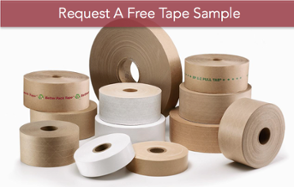
Want Carton Security? Request a Free Tape Sample

New Call-to-action