Showing posts with label security. Show all posts

Wednesday, September 4, 2019

6 Reasons to Make the Switch to Water-Activated Tape


Are you using packing tape (also known as plastic, pressure-sensitive tape) for sealing and shipping cartons from your warehouse? 
Read on to learn six good reasons to consider switching from plastic, pressure-sensitive tape to gummed paper tape (also known as water-activated tape or WAT).

1. Improved Productivity

Applying pressure-sensitive tape using a hand-held tape gun on multiple cartons can get very tiring for employees. The hand-held tape gun becomes heavy after repetitive use, causing productivity declines or even a repetitive stress injury. An alternative is to use water-activated tape with a water-activated tape dispenser. An independent research study demonstrated that the use of electric water-activated tape dispensers with WAT is 21% more efficient than the use of handheld tape guns. This productivity improvement can make a significant difference in your bottom line.

2. Tamper Deterrence

Using pressure-sensitive tape can leave your shipments susceptible to tampering and theft. Unless multiple strips of tape are used to seal the carton (expensive), it is easy to penetrate the carton by applying a bit of pressure on the top of the carton next to the tape to create a gap through which some of the content can be retrieved. The box can then be resealed leaving no indication that any pilfering has occurred.
Unlike pressure-sensitive tape that merely sits on top of the box, water-activated tape bonds with the carton. Any attempt to compromise the seal will tear the cardboard, making it readily evident that someone has tampered with the shipment. Customers who have made the switch to gummed tape and electric tape dispensers have seen a significant drop in product theft during transit.

3. Increased Security

Has your packing tape ever given way, or the bottom of your cardboard box opened because the contents were too heavy? One cause may be that standard packing tape is no more than a single ply of plastic, which isn’t very sturdy. Many packers will use multiple strips of pressure-sensitive tape, trying to better secure heavy cartons. There are several downsides to this approach; it is time consuming, it’s not cost efficient, and “mummifying” makes your packages look unprofessional and jeopardizes your branding.
Thanks to its permanent bond with the cardboard fibers (even with recycled corrugate), gummed tape is much sturdier. Further, reinforced gummed tape, which is made with fiberglass crossing strands between two layers of paper, results in even greater strength. This helps reduce breakage or damage during transit.

4. Cost-Effective

A superficial cost analysis of standard, pressure-sensitive tape will indicate that it is less expensive than water-activated tape. Look a bit deeper and the cost differential reverses.
Most packers use several strips of plastic tape to try to truly seal the carton and if the decision to use plastic tape is based on a cost saving per roll, that saving can be lost the instant a second piece of tape is used.
With water-activated tape only one strip of tape is needed to securely seal a carton. This material savings plus the savings gained from increased productivity, reduced theft and tampering makes water activated tape a cost-effective alternative.

5. Branding & Messaging

Your corporate brand image is one of the most important investments you can make in your company. In this environment of message overload, it is challenging to keep your brand front and center. Using gummed paper tape allows you to print your logo or a message directly onto your packaging tape. Cartons will have a clean, custom and professional look that elevates your branding and creates a positive customer engagement moment.

6. E-Commerce

Water-activated tape closes more e-commerce packages than packing tape. The fastest growing e-commerce companies are seeing the value in water-activated tape and are making the switch. They like gummed tape’s security, strength and branding potential.

Try WAT for Yourself

Ensure that your business is one of the growing number of companies who can benefit from moving away from plastic, pressure-sensitive tape. Try water-activated tape today by ordering a free sample for your warehouse. Simply click the image below.

New Call-to-action
[This post republished from the 
Better Packages Blog]

Thursday, September 27, 2018

How to Seal a Package with Water-Activated Tape

Water-activated tape (WAT) provides significant carton-sealing advantages. Also known as gummed tape, Kraft tape, paper tape, or reinforced gummed tape (when fiberglass is embedded), WAT provides a strong, tamper-evident seal that keeps cartons securely closed both during shipping and while in storage.

WAT also delivers a clean, professional look and can even be printed with your logo or other graphics to help increase brand awareness. What’s more, sealing with WAT using an electric, water-activated tape dispenser, has been shown by independent testing to be 21 percent more efficient than sealing with pressure-sensitive plastic tape.
What’s the key to capitalizing on all these benefits to improve your company’s profit margin? Knowing how to seal a package with water-activated tape. While it’s a straightforward process, there are some proven tips that can help you maximize the efficiency and effectiveness of your packaging operations.
“Sealing with WAT has been shown by independent testing to be 21 percent more efficient than sealing with pressure-sensitive plastic tape.” TWEET THIS
Sealing Packages with WAT: A Proven Step-by-Step Approach
After you’ve outfitted your packaging station with a water-activated tape dispenser such as an electric model in the UL-listed Better Pack 555 series, and water-activated tape, follow these steps for the most effective sealing of your packages:
  1. Properly load the tape in the dispenser by setting the WAT roll in place, pulling the leading edge over the rear guide, feeding it through front guide, and closing the lid.
  2. Check that there’s adequate water in the water tank and then dispense a six-inch tape test strip by pressing the “6” button to ensure that the adhesive is being fully wetted.
  3. Choose the amount of tape you need by first measuring the length of the opening to be sealed and adding 3” on either side that you’ll need for an overlap.  So,  if the opening is 12 inches long, add 6” equaling 18”.  Find the number on the dispenser that corresponds to your requirement and press the “18” button, if it is an electric, or pull the lever if it’s a manual.  The extra 3 inches on either side insures an effective seal.
  4. Dispense your tape and choose a sealing method:
    1. The Pinch Method - One strip is “pinched” onto one carton flap and then pressed onto the other when the two are brought together.
    2. The H Seal Method - The Pinch Method but with a short perpendicular strip at each end forming an “H” shape.
    3. The Full Seal Method - The Pinch Method but with a perpendicular strip at each end that extends slightly past the corner of the carton and is folded down.
  5. Your box is sealed and ready for handling.

Watch our informative video to see these carton sealing steps in action!

Switching to Water-Activated Tape is Easy
From ordering your WAT and water-activated tape dispensers to following the simple steps above, upgrading your packing procedures is simple. And once you do, the improvements are immediate. Your team will be more efficient, your packages will hold up better to the rigors of shipping, the risk of “press and grab” thefts will be reduced, and your shipping cartons can serve as mobile advertisements for your brand.
Plus, adopting WAT for many packaging tasks doesn’t mean your pressure-sensitive plastic tape and tape guns will go to waste. There are still plenty of tasks where plastic tape is the perfect choice. You simply need to look at the characteristics of the two types and select the tape that is appropriate in a given scenario.
If you have questions about our water-activated tape and water-activated tape dispensers, and how they can improve your package sealing operations, please contact us at your convenience.

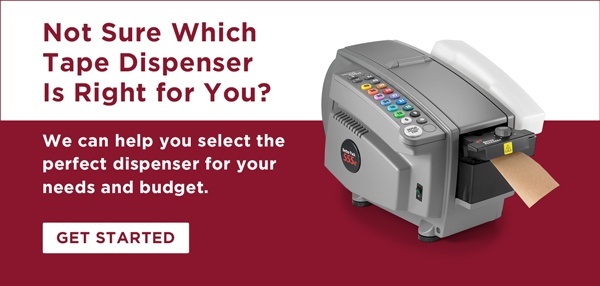
Which tape dispenser is right for you? GET STARTED

[This post republished from the 
Better Packages Blog]

Thursday, June 14, 2018

Damaged Shipment? Here's How to Make It Right


You’ve worked hard to create products that appeal to the marketplace, and your efforts are paying off in sales. The last thing you need as you strive to maintain your positive reputation, is for customers to be disappointed by damaged goods.

Unfortunately, packages do get damaged and products are broken while in the shipping stream. In fact, according to a widely reported study by analysts at customer service software and data provider StellaService, as many as 1 in 10 packages sustains damage in-transit. While you cannot control whether a shipper handles a package properly, you can control how you respond to an incident.
“While you cannot control whether a shipper handles a package properly, you can control how you respond to an incident.” TWEET THIS

How Customer Service Affects Customer Experience

If your product is damaged during shipping and you fail to address the situation proactively with your customer, the results can be detrimental, including:
  • ✔ Loss of revenue on the current order. The customer may refuse to pay for the product or contest the charges on his credit card.
  • ✔ Loss of future business from this customer. It’s safe to say that if you don’t resolve this type of issue to the customer’s satisfaction, he won’t be purchasing from you again.
  • ✔ Loss of future business from others. Consumers today have many platforms for expressing their displeasure about a company’s customer service. If their complaint gets shared widely on social media, this one incident can cost you future sales.
  • ✔ Loss of standing with watchdog organizations. Too many unresolved customer service issues and you may find your rating with entities like the Better Business Bureau dropping. This can hurt your business for months or years to come.
On the flip side, even an unfortunate situation like the receipt of damaged product can produce a positive outcome if you respond by putting yourself in your customers shoes.  People who receive exceptional, attentive customer service are likely to:
  • ✔ Tell their friends and family.
  • ✔ Share their experience on social media (often with a smiling photo of them holding the replacement item!).
  • ✔ Provide a positive testimonial you can use on your website or in marketing materials.
In other words, the time and effort you expend in creating a positive customer service outcome in response to a problem, tends to pay off many times over.
6 Steps for Dealing with Damaged Goods
What does an exceptional customer service response to damaged product look like? Below are six steps your team can take to turn disappointment into delight.
  1. Respond to the customer’s inquiry promptly — within minutes if possible; by the end of day if need be. No one likes to be kept waiting when they reach out to a company. That is especially true of someone looking to resolve a problem.
  2. Take full responsibility. While the shipper may have damaged the package, you chose the shipper. The customer will appreciate you being accountable.
  3. Get as much information as you can from the customer. Ask the customer to provide descriptions of the damage, photos if they are able to send them, etc. Be sure you have their accurate contact information.
  4. Promise immediate action and a prompt resolution. And, of course, follow through on those promises.
  5. Expedite the replacement. A few extra dollars for faster shipping will buy a great deal of goodwill.
  6. Provide an incentive for future orders. Include coupons or a discount with the replacement shipment. Your attentive handling of this issue coupled with a subsequent purchase that goes smoothly will likely earn the customer’s forgiveness and future business.
Other Considerations
Ideally you want to keep product damage from occurring in the first place. Packaging your merchandise in corrugated cartons surrounded by adequate padding and sealed with strong, water-activated tape (WAT) is a good start.
It’s also important to thoroughly research your shippers and steer clear of those known for a higher incidence of package damage. Once you’ve selected a shipper, be sure to learn about their damage policies. For example, what kind of insurance do they offer and how are damage claims filed and processed?
By taking great care both in how you ship your packages and how you address shipping incidents, you can help ensure that your customers are thrilled with their interactions with your company and become vocal advocates for it.
If you have questions about our water-activated tape, water-activated tape dispensers, and other products, please contact us at your convenience. 

Which tape dispenser is right for you? GET STARTED
[This post republished from the 
Better Packages Blog]

Friday, March 16, 2018

The Challenges of E-Commerce for Sporting Goods Retailers

Ten billion dollars. That was the aggregate spending on sporting goods online in 2015. For several years, the sporting goods industry has been one of the top industries involved in online purchases, according to US Department of Commerce. And there’s no sign of that slowing down. That means sporting goods retailers will be shipping a lot of athletic footwear, exercise equipment, licensed sports merchandise and athletic apparel in the years to come.
Sporting goods have been among the top online purchases, and there’s no sign of that slowing down


Sporting goods retailers will be sending those goods to some of the most finicky customers there are; the young, tech-savvy, and restless members of Gen Y and Gen Z. These consumers want today’s hottest athletic wear and trendiest sneakers. And they want them now. Hence, the expanding role of e-commerce sales in this sector.

The sporting goods industry is one of the most competitive and dynamic industries. Those involved must keep up with constantly changing models of sports equipment, rising competition and consumers who are both cost-sensitive and tech-savvy enough to shop for the best deals. Not to mention the seasonality of the market.

Shipping such high-priced, theft-worthy and sometimes heavy items requires a secure carton. One that can pass through the supply chain intact. One that can protect against the twin hazards of theft and environmental conditions. That’s where water-activated tape comes in.

Let’s take a look at each of these hazards and ways to cope with them:

Theft Thwarted – The lure of getting their hands-on today’s hottest sneakers may be too much to resist for someone in the supply chain. To make sure that hot pair of sneakers makes it to the customer who ordered them online, shippers will need a theft-resistant box. One that can’t be easily opened without leaving evidence. Water-activated packaging tape is tamper-evident and forms a complete bond with the carton itself, allowing for maximum strength and security. Because the adhesive actually bonds to the carton, once someone tries to remove it there is very visible evidence of their attempts.

Supply Chain Endured – Moving from warehouse to truck and hand-to-hand means a carton filled with baseball caps and baseballs needs to be tough. Water-activated tape can be reinforced with fiberglass fibers. These give extra strength to the seal. So, no matter how high those boxes are stacked in the truck or how many times they are exposed to the environment, the tape’s seal holds. It holds through the cold of winter and the humidity of summer. This means the Red Sox fan will get a cap that looks as good on his head in Fenway Park as it did on the retailer’s website.

Heavy Cartons Sealed – Many sporting good items ordered online are heavy.  Whether it’s a set of kettle bells for someone’s at home workout or 40 hockey sticks for a varsity hockey team, the pressure put on the box can be significant. When testers stressed cartons sealed with water-activated tape, it took 60 pounds of pressure for the cartons to break. By contrast, when the cartons were sealed with pressure–sensitive tape, it took only 16.8 pounds of pressure to open them. Those were the conclusions of an industry-leading testing and verification company, SGS North America. Intertape Polymer Group (IPG) and its brand, Better Packages, commissioned the tests to help customers compare the performance of water-activated tape and pressure-sensitive tape.

And there’s another benefit for shippers. Water-activated tape offers e-commerce shippers a way to support their brand. In a sector as competitive as athletic wear and equipment, your brand is everything. Why shouldn’t the box that brings those yoga pants promote the brand that brought them to the customer? It can. Water-activated tape can be custom-printed to show off your logo, your slogan, seasonal offerings or even messages that encourage your customers’ fitness journeys. It’s a branding opportunity that many online shippers miss.

The growth of e-commerce in the sports and fitness arena shows no sign of slowing. And chances are you’ll be challenged to meet the demands of these increasingly sophisticated customers in new ways in the coming years. Doesn’t it make sense to seal those orders to protect the excitement and happiness you created them to deliver?

Like to learn more about tape performance and shipping? Download this FREE ebook for tape dispensing packaging solutions


Better Packages | Water-Activated Tape Dispensers and Tape


Better Packages offers a complete line of water-activated tape dispensers. Its parent company, Intertape Polymer Group, sells a full line of Central® brand water-activated tape, including reinforced and non-reinforced tape. In addition to providing products for packing stations, the companies help their customers analyze and solve their packing station challenges.

[This post republished from the Better Packages Blog]
Thursday, October 5, 2017

Shipping Wine? Here are a Few Tips

Shipping wine can be a delicate and tricky business. Since a 2005 decision by the Supreme Court, more and more states have allowed out-of-state licensed wineries and wine brokers to ship wine. In fact, only five states (Delaware, Kentucky, Alabama, Oklahoma and Utah) now prohibit the inter-state shipment of wine, according to the Wine Institute, the advocacy group for California’s wineries and affiliated businesses.
Once the legal hurdles of mailing have been overcome, licensed wine shippers have an even more difficult task: safely getting the fruits of their labors into the glasses of those who want to appreciate them.

Here are a few tips for making that happen:

Upright or Flat?


Experts recommend shipping most wines standing up. For older wines that have been aged on their sides, Wickman’s Fine Wine Auctions advises laying them flat. They have this advice: “If you have a collection of premium, good quality wine and you are certain of the purchase and storage history (provenance) and if you know it has been lying flat, undisturbed, then you can confidently ship it lying flat. However, wine that has not been stored in cellar-like conditions or in temperature control should be shipped standing upright as poorly stored bottles are more likely to leak if shipped lying flat.”

The Right Box


The right box for shipping wine is a strong, corrugated cardboard box with dividers designed to protect the bottles. Choose a box with a thick outer shell and sturdy separators if you’re shipping the wine standing upright. Do not use boxes that intended for other purposes. They won’t be able to protect and support the weight of a full box loaded with heavy wine bottles. Shipping this way can lead to wet and disappointed wine customers. “Multiple wine bottles in a box can be heavy and hard to handle, an undesirable combination for fragile items,” points out uShip’s Joseph Ho in a blog post for Grape Thinking. For those concerned with the safety and security of those shipments, we recommend sealing the bottom with water-activated tape. It offers the additional benefit of being reinforced with fiberglass fibers and provides a superior bond with the box.

The Right Protection Inside the Box


Make sure the bottles are tightly corked. This makes sure corks don’t loosen during shipping. A good preventive measure is to secure corks with wire cork cages. This is especially important for sparkling wines.

Wrap the bottles in two to three sheets of paper, rolling the bottle forward. As you roll, mold the top of the paper to the bottle's neck to ensure that it's well-wrapped. Then secure the paper with tape.

Place each wrapped bottle into the cell-divided box and make sure the bottoms of the bottles are well-protected. To ensure the bottles don’t move around in transit, fill the voids with air pillows.

Before fully permanently sealing the box, shake it gently to make sure you don’t hear the bottles clanging together. If the bottles are moving around too much, add extra packing paper or more air pillows to fill the gaps.

Closing it up and sending it on its way


Once you're satisfied that the bottles are secure and stable, tape the box closed with water-activated tape for safety and security. This tape offers the extra protection of being tamper-proof. Add a “fragile” label in addition to the address label.

Be sure to advise the shipper you’re using of the box’s contents and urge them to keep the temperature as low as possible during transport. Ideally, the wine should be kept at 55°F to prevent damage. Some carriers have climate controlled vehicles which is a great option. And one final caution: Do not ship wines during periods of continuous hot weather.

Following these tips offers you the best assurance that the wines the vintner carefully crafted deliver the taste, aroma and experience the consumer wants to savor.

Salud!