Wednesday, October 17, 2018

How to Improve the Safety of Packing Stations

If someone told you that workplace injuries and illnesses cost U.S. companies over $1 billion per year would that number surprise you? How about if you learned from the U.S. Occupational Safety and Health Administration (OSHA) that the actual number is close to $1 billion per week? That would surely get your attention!

And those are just the direct workers’ compensation costs. On top of that, there are expenses associated with accident investigations and safety issue mitigation, hiring and training replacement workers, lost productivity, and more. If your company packs and ships products, your packing stations can be a hotspot for workplace injuries. Thankfully, there are steps that can help keep your organization from contributing to that $1 billion per week figure.
Packing Station Safety and Your Bottom Line
In addition to the financial impacts, allowing your shipping team to work in unsafe packing stations can have a negative impact on your bottom line in other ways. For example, employees who have to take extra care to not get injured because they work in poor conditions are likely less productive.
They are also more inclined to leave your company to find an employer that is more concerned with their well-being. Plus, as word gets around about people being injured and/or quitting, you will probably find that it becomes harder to hire good people. All of these factors can increase your operational costs and take a bite out of your profits.
“In addition to the financial impacts, allowing your shipping team to work in unsafe packing stations can have a negative impact on your bottom line in other ways.” TWEET THIS
7 Proven Steps for Improving Packing Station Safety
Here are some things you can do to make your packing station safer and your shipping team happier and more productive:
  1. Use water-activated tape (WAT) and water-activated tape dispensers to reduce the risk of repetitive motion injuries. Not only can excessive use of a handheld tape gun cause injury, but trying to get the proper angle for applying tape from a tape gun can put workers in awkward and sometimes dangerous positions.
  2. Provide your team with UL-listed water-activated tape dispensers. While using WAT can make your team more productive, a poorly designed and manufactured water-activated tape dispenser can put them at risk for injury.
  3. Have appropriate safety equipment available. Hard hats, back support belts, gloves, goggles, and other protective gear should be readily available in or near your packing station.
  4. Document and enforce rules on how much weight workers can lift. Back, neck, and shoulder injuries are common in environments where workers attempt to lift or move heavy cartons.
  5. Train staff on how to safely handle potentially harmful items. Packing items like glassware, firearms, and hazardous materials exposes employees to greater risk. Be sure they understand best practices for preparing dangerous items for shipment.
  6. Develop, test, and document safe packing procedures. This includes laying out your packing stations in a safe configuration and integrating them with your material handling system. Be sure that all your processes are in writing and easy for team members to find and follow.
  7. Perform regular safety trainings. In order for employees to stick to your safe packing procedures, you need to provide thorough initial training for new employees and regular refreshers for all employees.
The Last Word on Packing Station Safety
The final reason that it is critical to ensure that your packing stations are safe is that nobody wants to see a coworker get injured. Whether they suffer a minor laceration or a major, life/limb-threatening trauma, it is especially unfortunate if it is an injury that could have been prevented by a proactive approach to workplace safety. 
If you have questions about our water-activated tape, water-activated tape dispensers, and other products that contribute to safer, more productive packing stations, please contact us at your convenience.
A Guide For Tape Dispensing Performance Solutions

[This post republished from the 
Better Packages Blog]

Tuesday, October 9, 2018

How to Save Money When Shipping Automotive Parts


If you are an online automotive aftermarket retailer, you don’t need anyone to tell you that your industry is highly competitive and getting more so every day. How can you gain a strategic advantage in this environment? One way is to reduce your expenses, which gives you more capital for everything from expanding your product line to doing more marketing.

What’s a surefire method for cutting back on expenses? Lowering your shipping costs.
This expenditure tends to be significant for online automotive retailers because the items they shipare often:
  • ✔ Heavy
  • ✔ Oversized
  • ✔ Unevenly weighted
  • ✔ Irregularly shaped
  • ✔ Fragile
  • ✔ Susceptible to scuffing or scratching
Or, some combination of the above. And since these businesses can’t change the physical characteristics of their merchandise, they need to pay special attention to how they pack and ship it their automotive parts.
“As much as any other type of online retailer, companies in the automotive aftermarket space can improve their bottom line by lowering their shipping costs.” TWEET THIS
Proven Strategies for Minimizing Shipping Costs
For online automotive aftermarket retailers, the fastest way to grow the bottom line is to increase sales while simultaneously decreasing costs. While your marketing and sales teams are working on the first task, your shipping team can be working on the second. Here’s how:
  1. Negotiate an advantageous rate with your shipper. There are many factors you can use to bring your shipper to the bargaining table, including your growing shipping volumes or a quote from a competitor.
  2. Find ways to reduce package weight. When it comes to shipping costs, every ounce counts. You can minimize the weight of your packages by:
    • ✔ Using strong, lightweight corrugated cartons
    • ✔ Selecting cartons that are just big enough to do the job
    • ✔ Using a carton custom designed for the item
    • ✔ Filling empty spaces in cartons with lightweight packing material
    • ✔ Using customized foam inserts
    • ✔ Sealing packages with a single strip of strong water-activated tape (WAT)
  3. Eliminate expensive printed boxes. WAT (also known as gummed tape, Kraft tape, or paper tape) can be printed with your branding, making it a cost-effective way to increase brand awareness.
  4. Minimize theft. Another benefit of sealing packages with WAT is that the durable, tamper-evident bond it creates helps keep thieves from pressing in the top of a carton and removing items in a way that isn’t detected until later.
  5. Increase packing station productivity and safety with a UL-listed water-activated tape dispenser. These devices make it easy for shipping staff to get exactly the amount of tape they need quickly and efficiently. Plus, they help prevent repetitive motion injuries.
  6. Keep adequate supplies on hand. Having to rush order shipping supplies to meet customer demand because you let your inventory of cartons, tape, and packing material dwindle can be very costly. Be sure that someone on your shipping team is tasked with keeping an eye on supply levels.
  7. Minimize returns. Any time a customer must return an item, your shipping costs increase. In fact, they may triple if you must pay the shipping cost on the returned item and then send out a replacement. In addition to properly packing items so they arrive in good condition, you should also have processes in place to ensure that the correct items are shipped in the first place.
Immediate Improvement in Your Financial Performance
The great thing about cost cutting to improve your bottom line is that it is completely within your control. Your ability to attract new customers and grow sales is affected by several market dynamics, but you can start reducing your shipping costs today. All it takes is a little time and effort to assess your shipping practices and make the necessary modifications. Then you can enjoy the financial benefits from that point forward.
If you have questions about our water-activated tape, water-activated tape dispensers, and other products for the packing and shipping of automotive aftermarket parts, please contact us at your convenience.

Download our free guide to learn how to pack your automotive parts safely and securely—for a better bottom line.

[This post republished from the 
Better Packages Blog]

Thursday, September 27, 2018

How to Seal a Package with Water-Activated Tape

Water-activated tape (WAT) provides significant carton-sealing advantages. Also known as gummed tape, Kraft tape, paper tape, or reinforced gummed tape (when fiberglass is embedded), WAT provides a strong, tamper-evident seal that keeps cartons securely closed both during shipping and while in storage.

WAT also delivers a clean, professional look and can even be printed with your logo or other graphics to help increase brand awareness. What’s more, sealing with WAT using an electric, water-activated tape dispenser, has been shown by independent testing to be 21 percent more efficient than sealing with pressure-sensitive plastic tape.
What’s the key to capitalizing on all these benefits to improve your company’s profit margin? Knowing how to seal a package with water-activated tape. While it’s a straightforward process, there are some proven tips that can help you maximize the efficiency and effectiveness of your packaging operations.
“Sealing with WAT has been shown by independent testing to be 21 percent more efficient than sealing with pressure-sensitive plastic tape.” TWEET THIS
Sealing Packages with WAT: A Proven Step-by-Step Approach
After you’ve outfitted your packaging station with a water-activated tape dispenser such as an electric model in the UL-listed Better Pack 555 series, and water-activated tape, follow these steps for the most effective sealing of your packages:
  1. Properly load the tape in the dispenser by setting the WAT roll in place, pulling the leading edge over the rear guide, feeding it through front guide, and closing the lid.
  2. Check that there’s adequate water in the water tank and then dispense a six-inch tape test strip by pressing the “6” button to ensure that the adhesive is being fully wetted.
  3. Choose the amount of tape you need by first measuring the length of the opening to be sealed and adding 3” on either side that you’ll need for an overlap.  So,  if the opening is 12 inches long, add 6” equaling 18”.  Find the number on the dispenser that corresponds to your requirement and press the “18” button, if it is an electric, or pull the lever if it’s a manual.  The extra 3 inches on either side insures an effective seal.
  4. Dispense your tape and choose a sealing method:
    1. The Pinch Method - One strip is “pinched” onto one carton flap and then pressed onto the other when the two are brought together.
    2. The H Seal Method - The Pinch Method but with a short perpendicular strip at each end forming an “H” shape.
    3. The Full Seal Method - The Pinch Method but with a perpendicular strip at each end that extends slightly past the corner of the carton and is folded down.
  5. Your box is sealed and ready for handling.

Watch our informative video to see these carton sealing steps in action!

Switching to Water-Activated Tape is Easy
From ordering your WAT and water-activated tape dispensers to following the simple steps above, upgrading your packing procedures is simple. And once you do, the improvements are immediate. Your team will be more efficient, your packages will hold up better to the rigors of shipping, the risk of “press and grab” thefts will be reduced, and your shipping cartons can serve as mobile advertisements for your brand.
Plus, adopting WAT for many packaging tasks doesn’t mean your pressure-sensitive plastic tape and tape guns will go to waste. There are still plenty of tasks where plastic tape is the perfect choice. You simply need to look at the characteristics of the two types and select the tape that is appropriate in a given scenario.
If you have questions about our water-activated tape and water-activated tape dispensers, and how they can improve your package sealing operations, please contact us at your convenience.

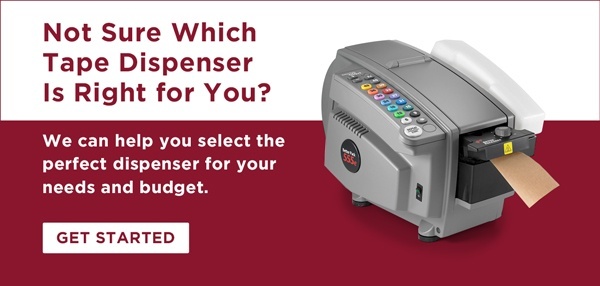
Which tape dispenser is right for you? GET STARTED

[This post republished from the 
Better Packages Blog]

Wednesday, September 19, 2018

Top 5 Reasons Why Shipping Automotive Parts is Difficult


Driven by forces like a fast-growing world population and the fact that vehicles are staying on the road longer than ever before, the global automotive aftermarket is expanding rapidly. In fact, it is expected to exceed $1 trillion by 2022 according to Global Industry Analysts.

If you are an online auto parts retailer, that’s surely great news to hear. However, as your sales volumes rise, it becomes increasingly clear that you face significant challenges when it comes packaging and shipping your merchandise.
“As your sales volumes rise, it becomes increasingly clear that you face significant challenges when it comes packaging and shipping your merchandise.” TWEET THIS
Why Automotive Aftermarket Parts are Difficult to Ship
To keep capitalizing on market growth, you’ve got to ensure that your merchandise continues to arrive at its destination undamaged and in packaging that creates a positive first impression. To do that, you’ve got to give consideration to what makes automotive aftermarket parts so hard to ship so you can address those challenges.
The characteristics of auto parts that create packaging and shipping challenges include that they are:
  • ✔ Large and heavy. How will your packaging support items like tires and engine components that can weigh hundreds of pounds? How will you box items that may not be excessively heavy but are big in size? You need to have good answers for these questions to ensure that your pick and pack operations are efficient and that the items arrive to the customer in good condition.
  • ✔ Irregularly shaped. Items like bumpers don’t fit well into any standard-size carton. Will you use a box large enough to accommodate the bumper and simply fill all the empty space with packing material? Or, will you have a shipping carton custom made?
  • ✔ Unevenly weighted. Some automotive parts pose interesting challenges because they are much heavier on one end than the other. As you pack them, you have to consider how they will be lifted and moved safely by your team and the shipper. 
  • ✔ Easily scratched. When the customer opens a package to look at the item they’ve ordered that is finished in gleaming chrome, the last thing they want to see is an ugly scratch. These kinds of parts need to be handled with special care and properly covered and padded in the carton.
  • ✔ Fragile. At the other end of the spectrum from the large, heavy items you may sell, are the smaller and more fragile components. It’s critical that you protect them properly to avoid costly returns.
  • ✔ Hazardous. Automotive parts that contain hazardous materials such as fluids that are flammable or caustic require special precautions and shipping procedures.
And, of course, as you look at the list above, it’s clear that adding to the “degree of difficulty” in shipping automotive parts is the variety of items that many retailers sell—large to small, nearly indestructible to very breakable, and everything in between.
Fortunately, there are packing best practices that cover items of all kinds. These strategies include using durable, lightweight, corrugated cartons to help protect items while keeping shipping weights down. And for sealing those cartons, strong water-activated tape (WAT) that creates a physical bond with the carton’s surface is an excellent choice. Not only can WAT seal packages with one neat strip, it can be printed with your logo or other branding elements to help generate brand awareness. 
The Final Challenge: Selecting the Right Shipper
No discussion of shipping challenges would be complete without mentioning that choosing the right shipper is critical. Will they handle your packages with care? Do they meet their time commitments, especially with rush shipments? There are many resources online that you can use to evaluate shippers and select the one (or ones) that will best meet your needs.
If you have questions about how our water-activated tape, water-activated tape dispensers, and other products can add value to your automotive aftermarket part shipping processes, please contact us.

Download our free guide to learn how to pack your automotive parts safely and securely—for a better bottom line.

[This post republished from the 
Better Packages Blog]

Wednesday, September 12, 2018

Proper Packaging: A Key to Success in the Automotive Aftermarket


A great way to grow your automotive aftermarket business — or any business — is to deliver an exceptional customer experience. In fact, as Forbes notes, it may be the best way to expand your business. The article quotes a PricewaterhouseCoopers (PwC) survey in which 73 percent of consumers said customer experience is a significant factor in their purchasing decisions. But, only 49 percent of those surveyed believe companies today provide a good customer experience.

In other words, if you aren’t meeting your customers’ expectations, you are surely losing business. One pivotal moment in the customer experience occurs when the recipient opens the package you shipped to them and inspects the contents. If that process doesn’t go well, you have a problem. Proper packaging of your automotive aftermarket parts is crucial to the start or continuation of a positive relationship.
“One of the pivotal moments in the customer experience occurs when the recipient opens the package you shipped to them and inspects the contents. If that process doesn’t go well, you have a problem.” TWEET THIS
What Careful Packaging Delivers
Proper packaging of automotive aftermarket parts creates some general goodwill.  However, you may be wondering how, specifically, does it help your business? There are several ways, including:
  • ✔ Fewer returns. Ensuring that your merchandise is adequately protected during shipping means less damage and fewer returns. And those two factors combine to help improve your bottom line, both by reducing product costs and the labor associated with processing returns or exchanges.
  • ✔ Less theft. Sealing your shipping cartons with water-activated tape (WAT), which creates a secure, tamper-evident bond, helps reduce theft and the associated expense.
  • ✔ Positive reviews. People tend to give a lot of weight to the experiences of others when it comes to selecting a company with which to do business. A handful of positive reviews on your website can be a contributing factor to many future sales.
  • ✔ Increased brand awareness. WAT can be branded with your company name, logo, etc. When you seal your packages with branded WAT, everyone from the shipping company staff to neighbors who see the package on the recipient's front porch become more familiar with your company.
  • ✔ Social media shares. Social media platforms have made it easy for one person to express their opinion to potentially millions of others around the world with just a few keystrokes. If what they share is their satisfaction with the parts they received, it can give your company a tremendous boost. If their post describes an unpleasant experience — potentially with a picture just to drive the point home — your sales may suffer.
  • ✔ Repeat sales. It’s a business truism that the easiest person to sell to is the one that’s already a happy customer. When a neat, secure, beautifully branded package arrives with well-protected parts inside, you are already well on your way to repeat business.
Small Investment. Big Return.
It’s understandable that some companies say, “It’s the superior quality of our merchandise that matters. How it gets to the customer is unimportant.” Obviously, the first part of that statement is true. You have to sell an excellent product to succeed in business.
However, both personal experience and customer satisfaction surveys will tell you that the second part of the statement simply isn’t true. A customer’s perception at the moment they receive a package can affect their opinion of your company from that point forward. A small investment in time and effort regarding the packaging of your automotive aftermarket parts can deliver big long-term returns.
How can our water-activated tape, water-activated tape dispensers, and other products play a role in helping you impress your customers? We’re happy to tell you how our many satisfied clients are benefitting from them. Please contact us at your convenience.

Download our free guide to learn how to pack your automotive parts safely and securely—for a better bottom line.

[This post republished from the 
Better Packages Blog]

Monday, August 27, 2018

Why is WAT the Best Choice for Online Furniture Retailers?


The online furniture market is growing rapidly. In fact, according to eMarketer, U.S. ecommerce sales of furniture and home furnishings will exceed $50 billion this year. While those sales are a small percentage of overall retail ecommerce, the furniture category is growing faster than any other at over 18 percent. What’s driving that growth? A couple things.

Technology is one contributor. Advances in computer monitor display quality, website capabilities, and other factors make it easier for consumers to “see” a product and be comfortable purchasing it online. The other enabler of online furniture sales growth is improvements in shipping processes. Leading retailers are learning important lessons about how to package and ship their product so that it not only arrives safely, but also increases brand awareness and enhances the company’s reputation.
The Challenges of Shipping Furniture
There are many factors that make shipping furniture a challenge, including:
  • ✔ Size. Many pieces of furniture are large and not easily packaged.
  • ✔ Shape. Items like a tall lamp with a large base and head require unique cartons.
  • ✔ Weight. Many pieces of furniture are heavy and this must be considered when packaging them.
  • ✔ Fragility. Features like the slender legs on a stylish nightstand or the detailed woodwork on a chair back make protection from damage more problematic.
  • ✔ Multiple components. It is helpful if a piece of furniture can be broken down into smaller components, but then you face questions about whether to pack the pieces in one box or multiple boxes.
How you address your packaging challenges can have a significant impact on profitability for a number of reasons. First, the more efficient your packaging process is, the less it costs you in labor and the more revenue that goes to your bottom line. Also, ensuring that items arrive undamaged is key to avoiding the time and expense of handling returns.
Plus, the packaging decisions you make can affect shipping costs. You need to protect your product, but excessive packing material can affect the weight of a carton. Finding the right balance is crucial.
“How you address your packaging challenges can have a significant impact on profitability for a number of reasons.” TWEET THIS
Why Water-Activated Tape Should Factor into Your Packing Process
Water-activated tape (WAT), also known as paper tape, gummed tape, and Kraft tape, is unique in its ability to help you meet all the objectives of furniture packaging. Here’s why:
  • ✔ WAT is strong. When applied to the surface of a carton, WAT creates a physical bond with the material, essentially merging with it. Other forms of tape do not do this. That strong seal is your best bet for preventing the in-shipment opening of a box and damage to the product inside.
  • ✔ WAT is easy to apply. Using a water-activated tape dispenser, your packaging team can apply a strip of WAT in seconds, smooth it down, and move on to another package.  The adhesive will work its magic to rapidly bond with the carton’s surface.
  • ✔ WAT provides a professional appearance. If you use other forms of tape, effectively sealing a shipping carton may require multiple strips. One strip of WAT is all you need to seal a package, meaning the shipment will look neat and professional when the customer receives it.
  • ✔ WAT can be branded. Your logo, tagline, and other elements of your branding can be printed on paper tape. That added visibility can help increase awareness, help you stand out from other online furniture retailers, and grow sales.
  • ✔ WAT can deter theft. Other forms of tape are more susceptible to a thief pressing down on the top flaps of a carton, gaining access to the contents, and then letting the flaps spring back into place. This leaves you, the shipper, and the customer wondering at what point items were stolen. WAT’s tamper-evident seal gives thieves second (and third!) thoughts about trying to get into a carton.
A Packaging Upgrade That Pays Dividends
Switching to WAT is about more than getting a better form of tape. It’s about getting better financial results. You may not see that initially as you look at a carton sealed with that one clean strip. But over time, your books and the feedback you get from shippers and customers will tell the story. And, making the switch is easy. You simply purchase one or more water-activated tape dispensers and rolls of WAT, and you are on your way to more effective packaging.

If you have questions about our water-activated tape, water-activated tape dispensers, and other products, please contact us at your convenience. 
A Guide For Tape Dispensing Performance Solutions

[This post republished from the 
Better Packages Blog]

Tuesday, August 21, 2018

Are You Confident You Have the Right Packing Tape?

Central® brand reinforced water-activated tape (kraft paper tape) has a strong, tamper-evident seal

Is your company using the right packing tape? That may not be a question you’ve considered, but it should be. There are a number of reasons to think carefully about the packing tape you use, and potential financial consequences for making the wrong decision.

For example, using a type of tape that creates a strong seal and prevents a shipping carton from opening unexpectedly in transit can keep your products from being damaged and eliminate the time and expense of dealing with returns. In other words, it is a choice that can have a direct impact on our bottom line.
“There are a number of reasons to think carefully about the packing tape you use, and potential financial consequences for making the wrong decision.” TWEET THIS
Types of Packing Tape
There are two primary types of packing tape: plastic pressure-sensitive tape (PST) and water-activated tape (WAT).
PST is also referred to as poly tape, plastic tape, or simply packing tape. It is a clear, petroleum-based tape that has a pressure sensitive adhesive on the back of the film. It adheres to a surface based on the pressure applied as the strip is put in place. How well it adheres is based on several factors including:
  • ✔ how much pressure is applied;
  • ✔ how clean the surface is;
  • ✔ and what environmental conditions are encountered in the packing and shipping process. 
In today’s market, this tape needs to work on recycled cartons and this presents a challenge. Recycled cartons have shorter fibers than new cartons, because they have gone through the production process multiple times.  As a result, recycled cartons require more binders and adhesives to keep the fibers together. The shorter fibers and adhesive binders increase packaging failures and put your product and your profits at risk.
WAT is also be called gummed tape, reinforced gummed tape (when fiberglass is embedded), Kraft tape, or paper tape. It is made of white or natural color paper and starch-based adhesive. Water is applied to the back of the tape (typically using a water-activated tape dispenser) before it is applied, and this activates the adhesive.
When the tape is placed on the carton surface, a blotting occurs between the adhesive and the carton surface. This process welds the tape to the surface of the box by penetrating the fibers and creating a permanent bond to the box. This happens with minimal pressure on new boxes as well as 100% recycled boxes and represents the most secure way to ensure your product makes it from point A to point B. A positive customer experience and your profit margin is preserved with WAT.
Strategies for Assessing Your Packing Tape
Before making your next packing tape purchase, it pays to assess your current tape to ensure that the product you select meets all your needs. Below are some questions to ask about the tape you are using today.
  • ✔ Does your tape create a strong seal? You want your tape to help protect the contents of a shipping carton and to deter thieves who are more likely to target a package with a questionable seal.
  • ✔ Does your tape create a tamper evident seal? If a thief does gain access to the contents of a shipping carton, you want that fact to be clear when the recipient examines the package, so they can take prompt action to address the situation.
  • ✔ Is your packing process safe? How your team seals cartons for shipping is important. Repetitive motion injuries can result in medical claims and lost productivity. Also, the use of electric WAT dispensers that aren’t UL listed can be a risk.
  • ✔ Is your tape strong enough to hold up to even the heaviest shipments? The failure of any seal on a carton is problematic. The failure of a bottom seal can be catastrophic.
  • ✔ Does your tape maximize your ROI? If you need to use more strips of a less-effective tape, your “cost per shipped package” may be much higher than it ought to be.
  • ✔ Is your packing process efficient? The time it takes to prepare a carton for shipping is important. A few extra minutes here and there, struggling to get a proper seal, can quickly add up.
  • ✔ Can your tape increase brand awareness? Printing your logo, tagline, or other brand-building information on your packing tape can make more people aware of your organization and your offerings. 
The answers to these questions will tell you if you need to consider switching to another type of tape. WAT meets all these criteria, making it a wise choice for any shipping operation.
Results from Independent Testing
While PST has its place in every business, WAT consistently scores higher in testing for adhesion, packing productivity, and tape integrity in different atmospheric conditions. This is according to independent research firm SGS North America and its independent testing of different types of tape.
If you have questions about our water-activated tape, water-activated tape dispensers, and other products as you assess your shipping tape, we’re happy to share our insights. Please contact us at your convenience.

New Call-to-action


[This post republished from the 
Better Packages Blog]